
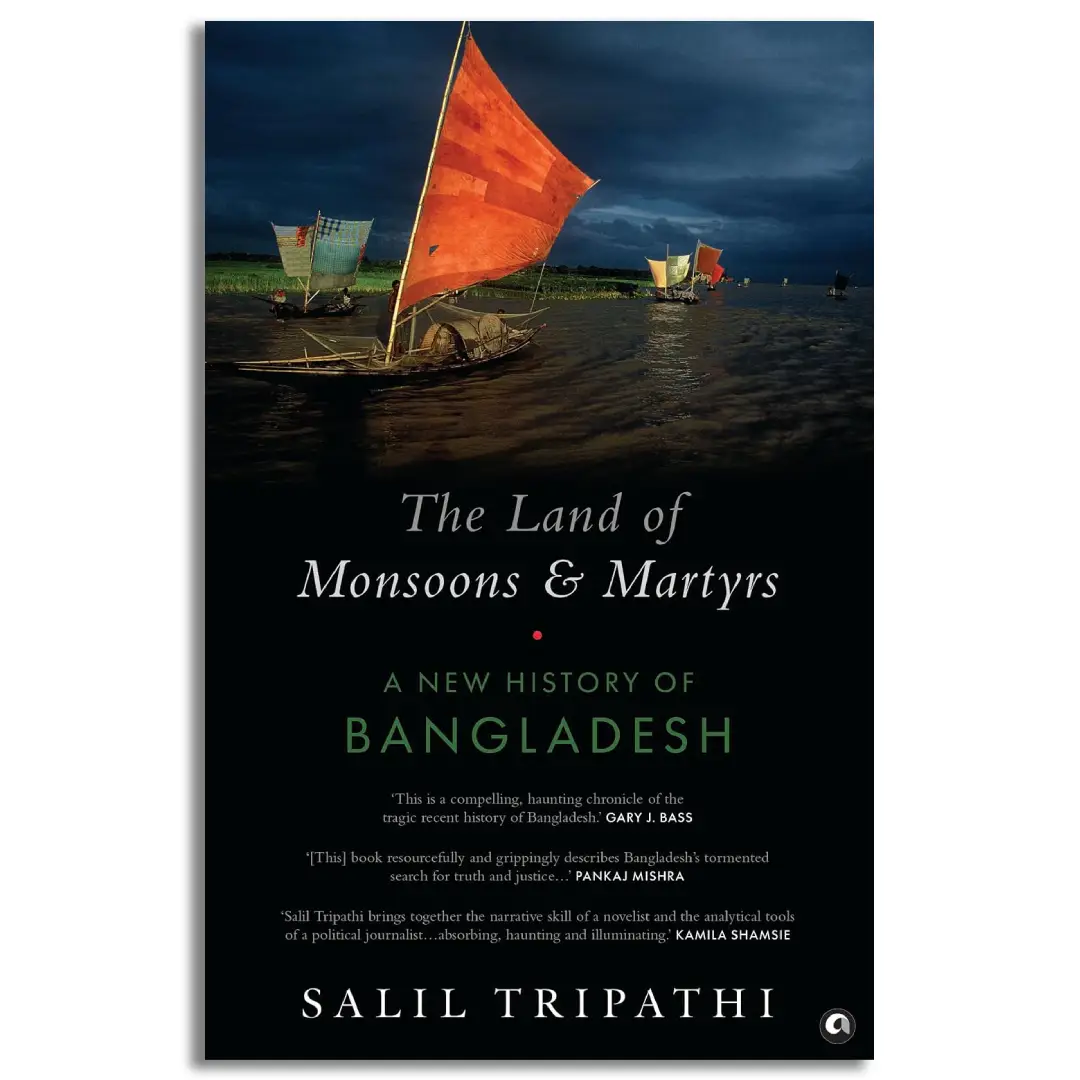
The Land of Monsoons and Martyrs
Between March and December 1971, the Pakistani army committed atrocities on an unprecedented scale in the country’s eastern wing. Pakistani troops and their collaborators were responsible for countless deaths and cases of rape. Clearly, religion alone wasn’t enough to keep Pakistan’s two halves united.
From that brutal violence, Bangladesh emerged as an independent nation, but the wounds have continued to fester. The gruesome assassination of Sheikh Mujibur Rahman—the country’s charismatic first prime minister—and most of his family, the coups and counter-coups which followed, accompanied by long years of military rule were individually and collectively responsible for the country’s inability to come to grips with the legacy of the liberation war.
Around five decades later came the catastrophic fall of Mujib’s daughter, Hasina Wajed, who ruled the country for twenty years. Bloody protests erupted across Bangladesh in 2024, when Hasina reinstated quotas for government jobs, the majority of which benefited the progeny of freedom fighters. Over a thousand dissenting civilians were killed when she unleashed the security forces on them. Within a month, she was forced to flee to India in a helicopter, marking an ignominious end to her career.
In this revised and updated edition, Salil Tripathi travels the length and breadth of the country, probing its trauma through interviews with hundreds of Bangladeshis. The Land of Monsoons & Martyrs, which was originally published as The Colonel Who Would Not Repent, offers the reader an unforgettable portrait of a nation whose political history since Independence has been marked more by tragedy than triumph.






























Reviews
There are no reviews yet.